Why Users Don't Trust AI With Their Money (And How Product Design Fixes It)

AI agents can now pay your bills. The catch is that you have to trust them first, and a lot of products ask for that trust far too early.
I recently downloaded Muse, Meta's new AI app. The very first onboarding step asked for my credit card to verify my account. It hadn't shown me anything yet, and it already wanted my card. Bit much for a first date, Meta.
That moment sums up where AI in FinTech is right now. Before anyone hands their money to AI, they need to see what it's doing and why. Making that clear on screen is a product design job.
At Flexxi Studio, my team and I have spent years on FinTech product design with teams like AstroPay and Decaf. In this article, I look at how agentic AI is changing payments, and what design has to do with whether people trust it.
What is agentic finance?
Agentic finance is AI agents that act with your money instead of only advising you. They can pay a bill, make a purchase or approve an expense on your behalf.
It's already live. This summer, Nuvei and Visa ran agentic payments on real Visa rails, using real cards from European banks. Visa is also connecting its agentic commerce tools directly to OpenAI. On the business side, Ramp's AI agents have made more than 26 million decisions for finance teams in a single month.
The technology is ready. People are a different story.
Do consumers trust AI with their payments?
Consumer trust in AI payments is still low. Visa's own research found that 72% of US consumers have used AI to shop, but only 23% trust it with their payments. In the UK, an ACI Worldwide survey found that 60% of people would stop using an AI shopping agent after a single mistake.
So what changes their minds? Control. People are far more open to AI handling payments when they set the limits or give the final approval. They want to see what's about to happen before it happens.
That makes trust a UX design challenge, whether FinTech teams call it one or not. And it starts long before any AI touches money. It starts at sign-up.
Why FinTech onboarding decides user trust
A while back, I signed up for both Ramp and Brex for Flexxi Studio.
Ramp had the best outbound team I'd ever seen. Then the onboarding flow hit me with an early credit check and a clunky bank connection. I dropped off in under five minutes and only came back because I had to, with impending dread.
Brex was the opposite. Its follow-ups were quiet, almost too quiet. But one small detail won me over: a "Prefilled with AI" label next to company details it had already filled in, correctly. It showed what the AI did and made it easy to check. That one label did more for my trust than any feature page.
- Ramp: strong sales outreach, but an early credit check and clunky bank connection with no visible AI help. Result: I dropped off in under five minutes.
- Brex: quiet follow-up, but AI prefilled company details and clearly labeled it for review. Result: I signed up.
Since then, Brex has become part of Capital One and Ramp has launched AI agents for finance teams. The products moved on, but the lesson holds: if the first screens feel confusing, nobody will let your product act on their behalf later.
Case in point: Flexxi still isn't a Ramp customer.
AstroPay case study: how FinTech website design drove growth
AstroPay started in 2009 as a payment voucher, later pivoted into an app built for sports fans, and today is a global digital wallet. People use it to get paid from abroad, convert money and spend wherever they are, competing with Wise, Revolut and Mercado Pago.
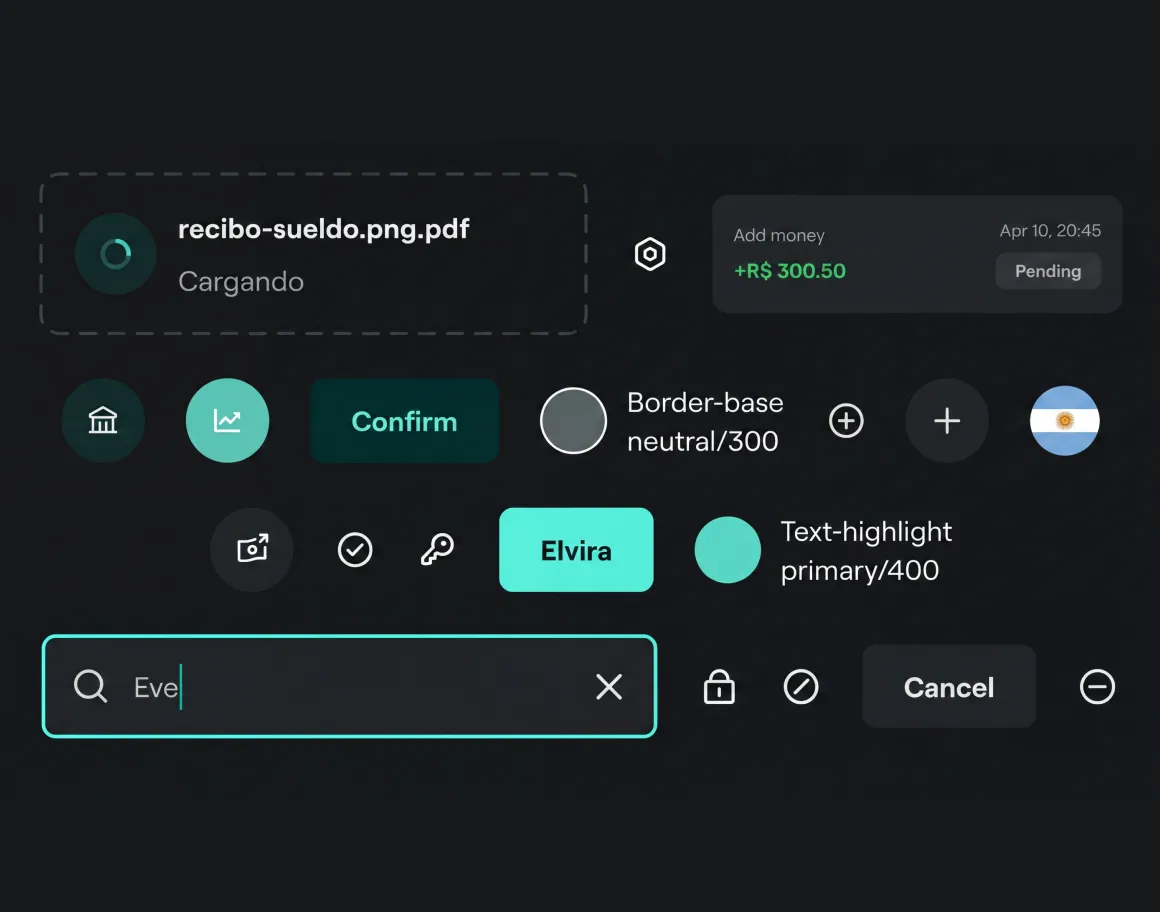
We started working with AstroPay in late 2023 across both the consumer and B2B sides of the business. We redesigned onboarding, built their design system and designed their B2B platform alongside the consumer mobile app. Inside the app, we worked on the AstroCard request flow, notifications and the help center. In the help center, for example, the system pulls in your transaction details before an agent steps in, so you don't have to explain your problem twice.
The app was already doing the trust work. It shows the rate before you commit and where your money is at every step.
The website hadn't caught up. It was built to introduce the brand, with big taglines, long scrolls and a lot of explaining who AstroPay is. That works when people already know you. It doesn't when they land on your site with a question and their money on the line.

Around the same time, AstroPay went all in on its global wallet for everyday international users. The website had a new goal: reach people already looking to send money internationally, and give them a reason to download the app.
We started from their questions, like "What's the best rate from Argentine pesos to USD?" and "How fast will it arrive?" The site was rebuilt to answer those fast, with a currency exchange calculator right at the top. Type an amount, see the rate, tap through to the app.
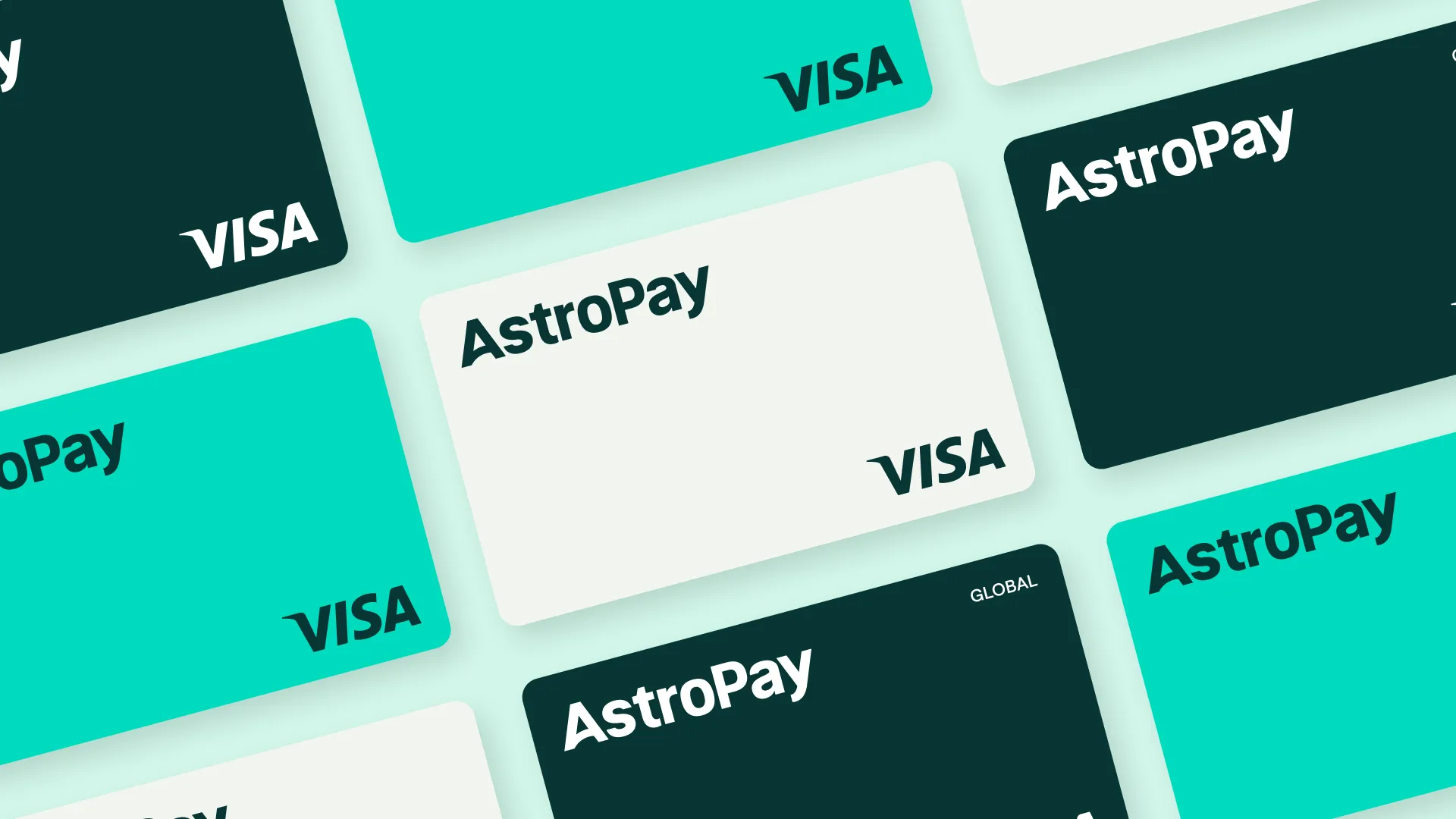
The FinTech rebrand followed the mission. AstroPay's new positioning, "the wallet of this world," is about giving people more control over their money, so the visual identity had to feel just as steady: deep green, mint accents and bold rounded type that feels friendly and sure of itself.
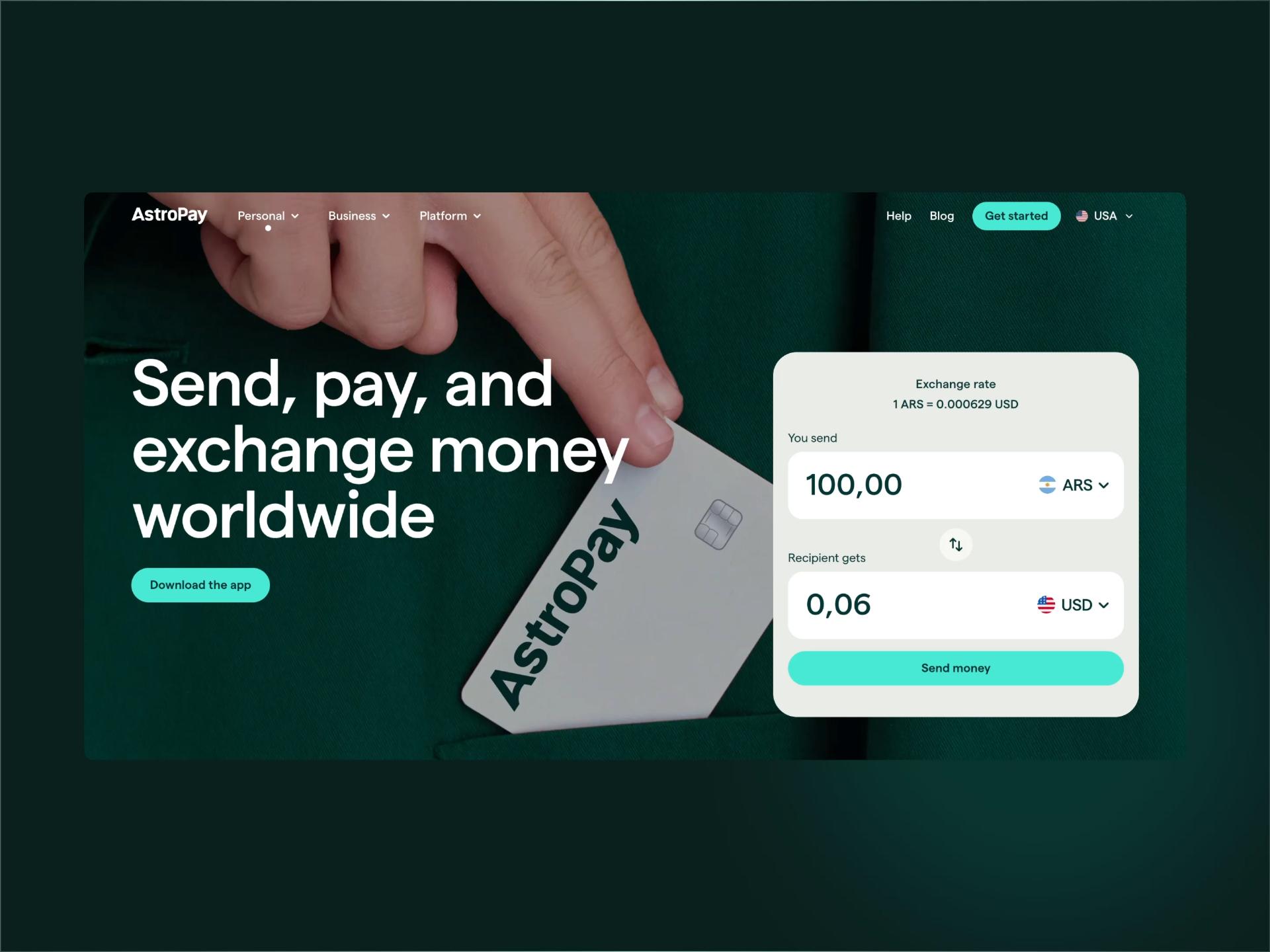
Eighteen months later, the site pulls over 2.5 million unique monthly visitors and ranks for the same searches as Wise and Western Union.
How to design trustworthy AI in FinTech apps
Here's a quick test I use for any FinTech product: could a first-time user tell, in five seconds, what the AI is about to do with their money and how to stop it? If not, start there.
A few principles my team applies in our FinTech product design work:
Show before you act. Display the amount, rate or action before the AI carries it out, and make approval a clear step.
Make AI transparent. When AI fills in, suggests or decides something, say so on screen and make it easy to review, like Brex's "Prefilled with AI" label.
Keep a human in the loop. Spending caps, approval rules and easy undo give people the control that makes them comfortable saying yes.
Earn trust before asking for data. Show value before requesting a card, a credit check or a bank connection.
Design your website around user questions. People arrive with a specific concern about their money. Answer it on the first screen.
Want more on design, FinTech and AI?
Every issue of my newsletter, Flexxible by Design, brings real stories from client work and what I'm learning along the way.
Subscribe to Flexxible by Design →
Frequently asked questions
What is agentic finance?
Agentic finance refers to AI agents that take financial actions on a user's behalf, such as paying bills, making purchases or approving business expenses, instead of only giving recommendations.
What is agentic commerce?
Agentic commerce is when AI agents shop and pay on a user's behalf, finding products, comparing options and completing checkout within limits the user sets. Companies like Visa and OpenAI are building the payment tools behind it.
Why don't users trust AI with their money?
People worry about mistakes they can't see or reverse. Visa's research shows that while most US consumers have used AI to shop, fewer than a quarter trust it with payments. Trust grows when users can see what the AI will do and approve it first.
How does UX design build trust in AI-powered FinTech?
By making AI actions visible, labeling AI-generated content, letting users set limits and approve actions, and keeping onboarding clear and low-friction before asking for sensitive data.
Why does FinTech onboarding matter so much?
Onboarding is the first moment a user decides whether a product is safe. If early screens feel confusing or ask for too much too soon, users drop off and are unlikely to trust the product with money later.
How did AstroPay grow its website traffic?
AstroPay rebuilt its website around the questions users were already searching for, putting a live currency converter at the top that leads to the app. Eighteen months later, the site reached over 2.5 million unique monthly visitors.
Building AI into a financial product?
My team and I design FinTech products and AI features people feel safe handing their money to. If you're working on one, I'd love to hear about it.
Sources
- Visa, New Visa Research Finds Consumer Trust is Accelerating the Path to Agentic Commerce (Visa Trust Index)
- Nuvei, Nuvei Completes First-Party In-Agent Payment with Visa
- Visa, Visa Partners with OpenAI to Power the Next Generation of AI Commerce
- FinTech Global, Ramp unveils AI finance tools as valuation hits $32bn
- ACI Worldwide, Six in Ten UK Consumers Would Stop Using an AI Shopping Agent After One Mistake
Related reading
- No More Panic Taps: Rethinking the Card Cancellation Experience in FinTech
- Getting Help Doesn't Have to Suck: The New AstroPay Help Center
- Expanding Design Systems at AstroPay
Want more on design, FinTech and AI? Subscribe to my newsletter, Flexxible by Design →
Notifications and Alerts