Reframing Help at AstroPay
Project Overview
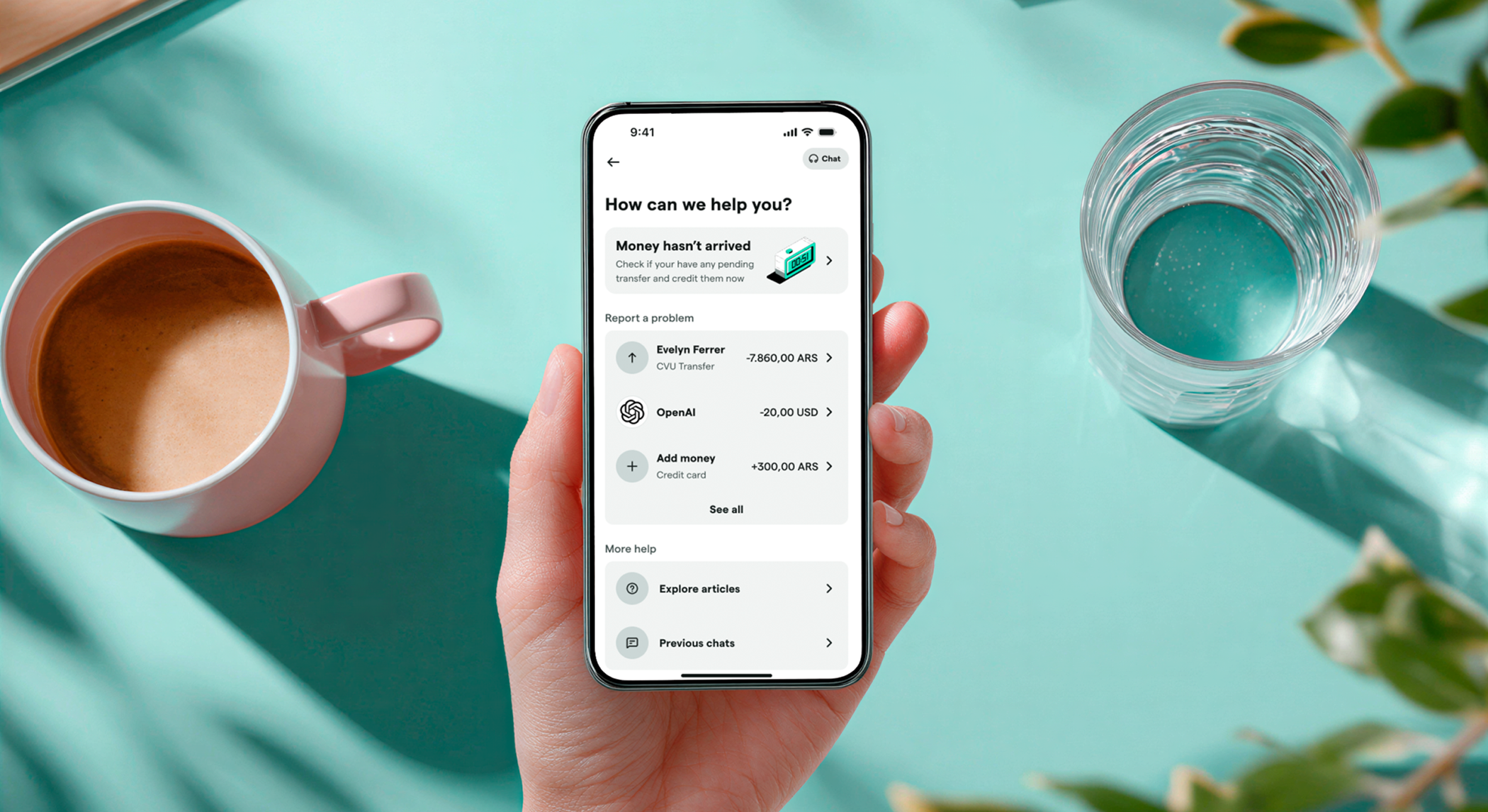
AstroPay partnered with Flexxi to redesign its Help Center, transforming it from a static content repository into a scalable, transaction-aware self-service system. The project focused on aligning support with real user behavior, enabling users to resolve issues directly within their workflow while reducing friction and cognitive load.
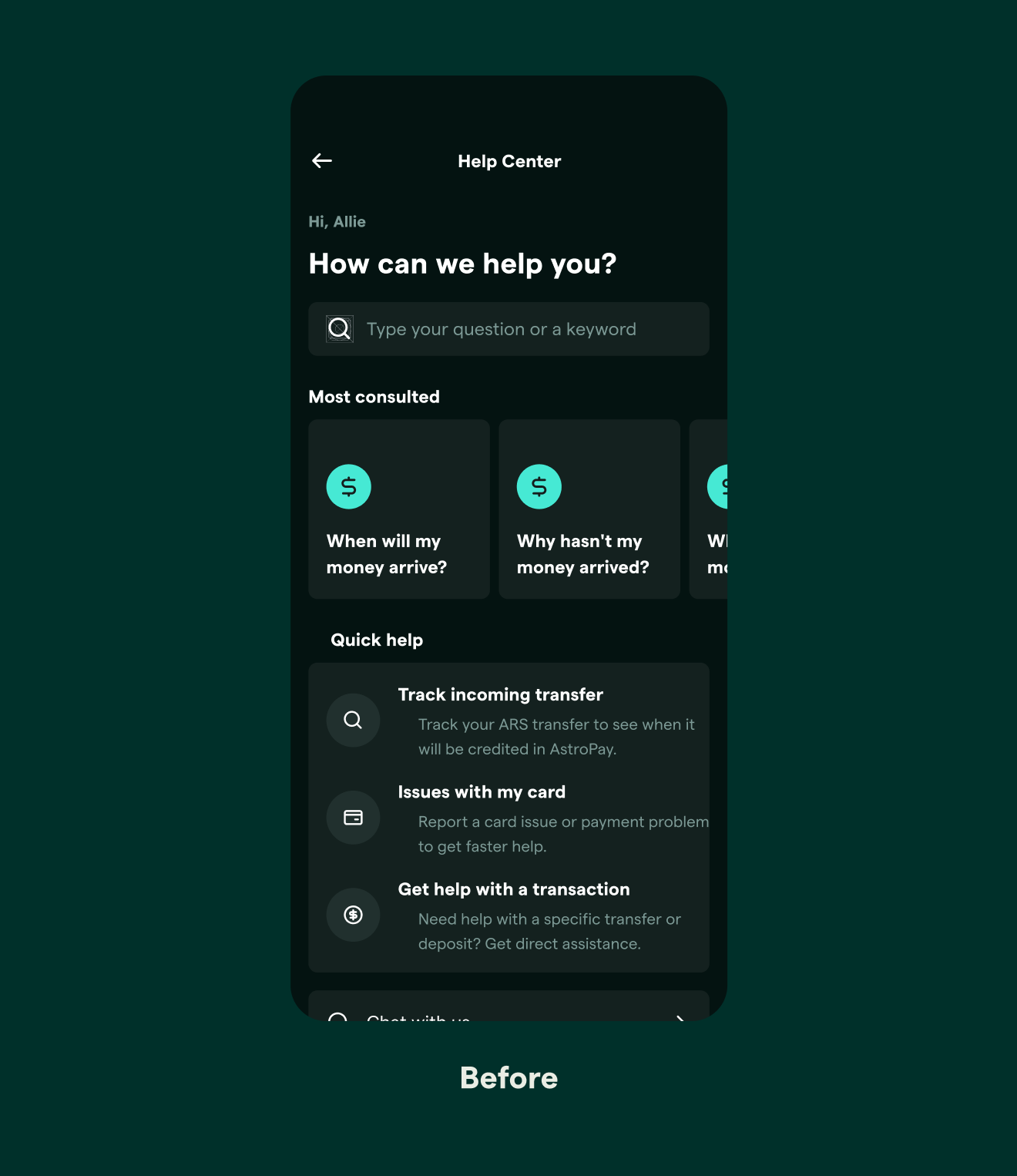
As AstroPay scaled, its Help Center became cluttered, disconnected from real user needs, and ineffective at guiding users when they needed help the most.
The Challenge
The existing Help Center introduced multiple layers of friction. Visual clutter and lack of hierarchy increased cognitive load, while generic categories forced users to search for problems they already knew they had. Help was also disconnected from where issues actually occurred—transactions—requiring users to leave their flow and manually explain their problem. These issues revealed a deeper structural problem: the support system was not designed to scale with AstroPay’s self-service vision, nor to provide contextual, actionable guidance at the right moment.
Flexxi’s approach
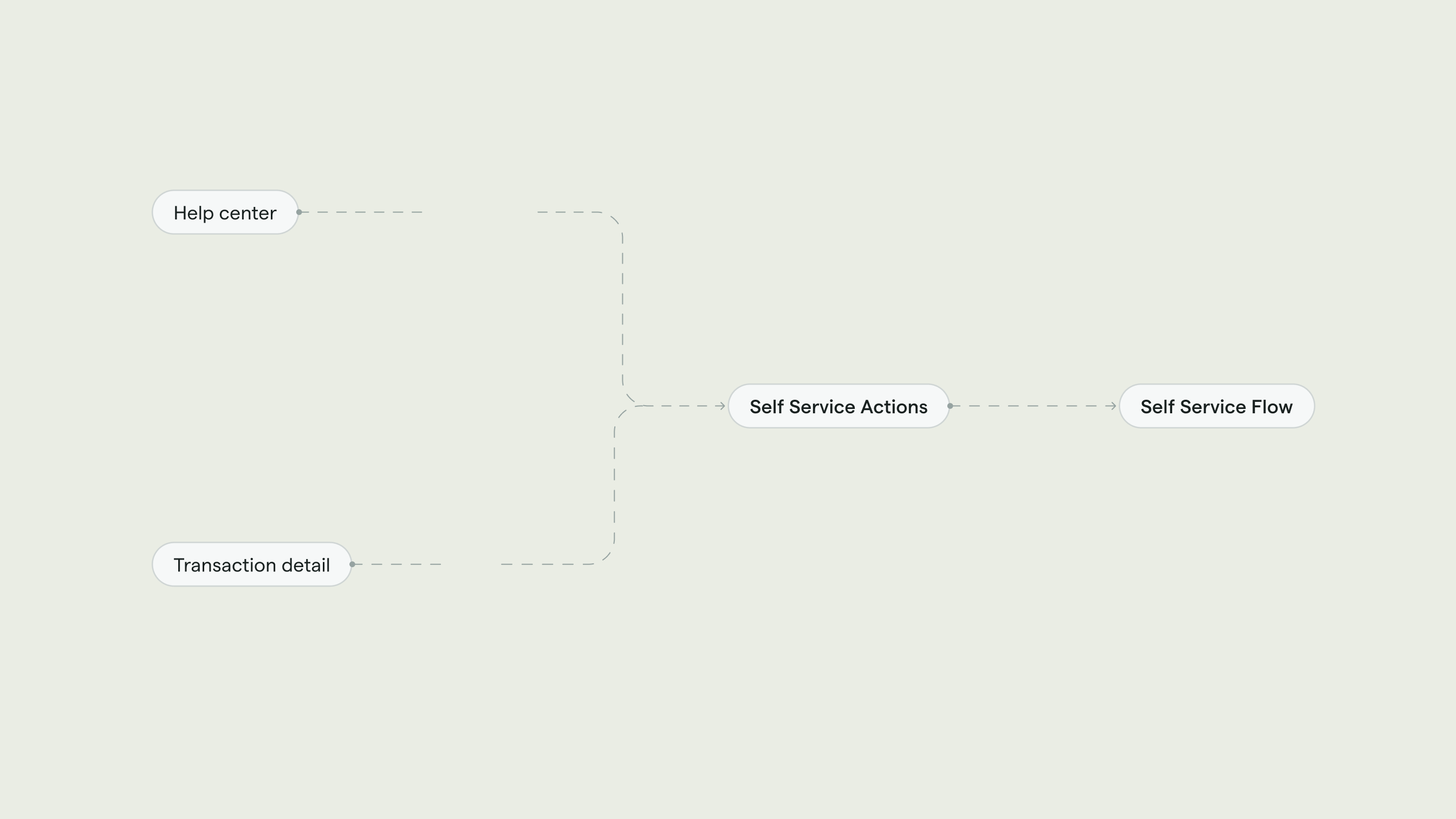
Flexxi approached the problem by redefining how help is triggered, contextualized, and resolved. Instead of treating support as a separate destination, the focus shifted to embedding help directly into the product experience. The team used real transaction data and operational logic to understand user intent and design a system that adapts to context. The goal was to create a self-service-first model where users can quickly identify their issue, understand it, and resolve it without unnecessary friction or escalation.
Our Solution
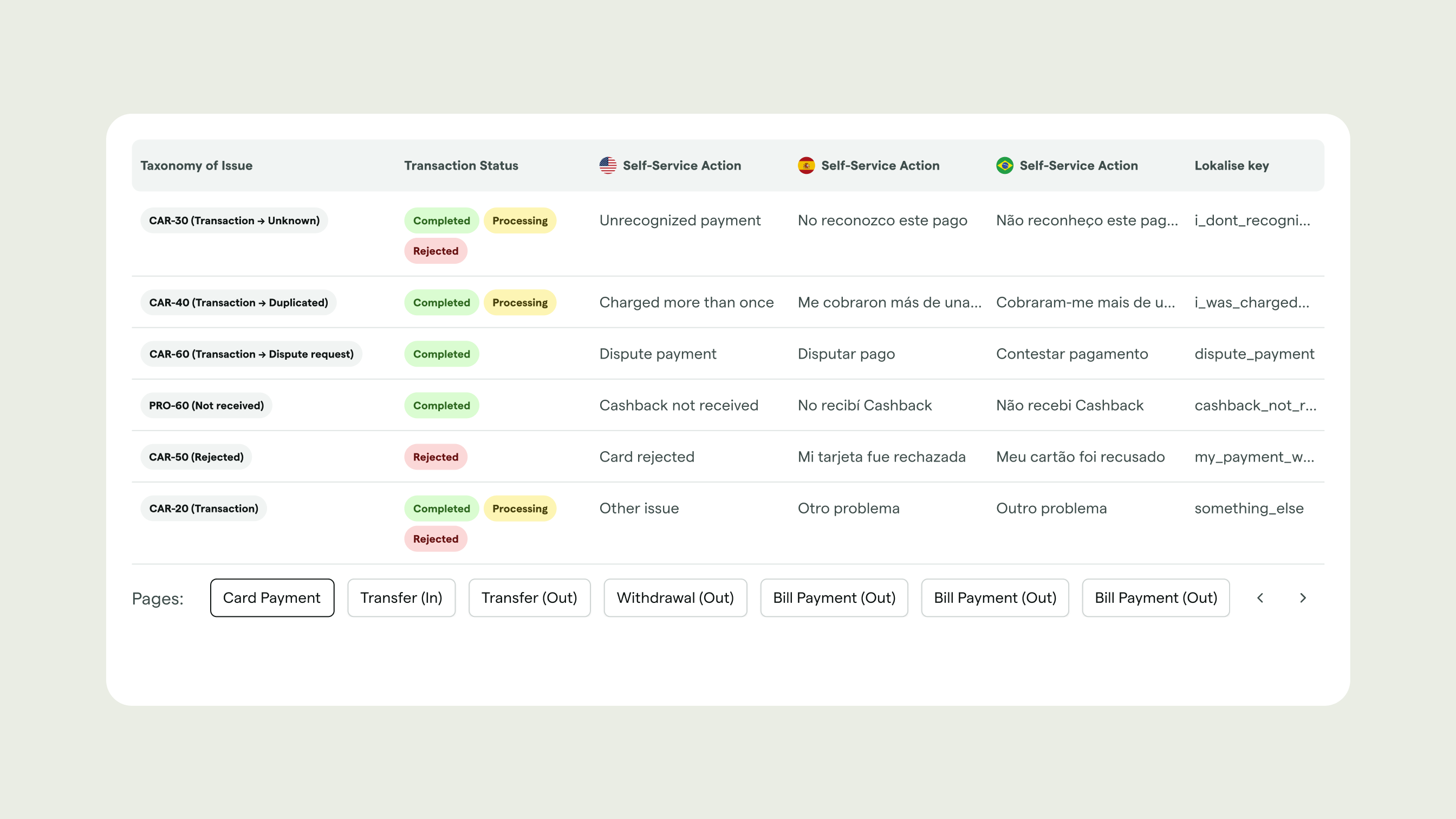
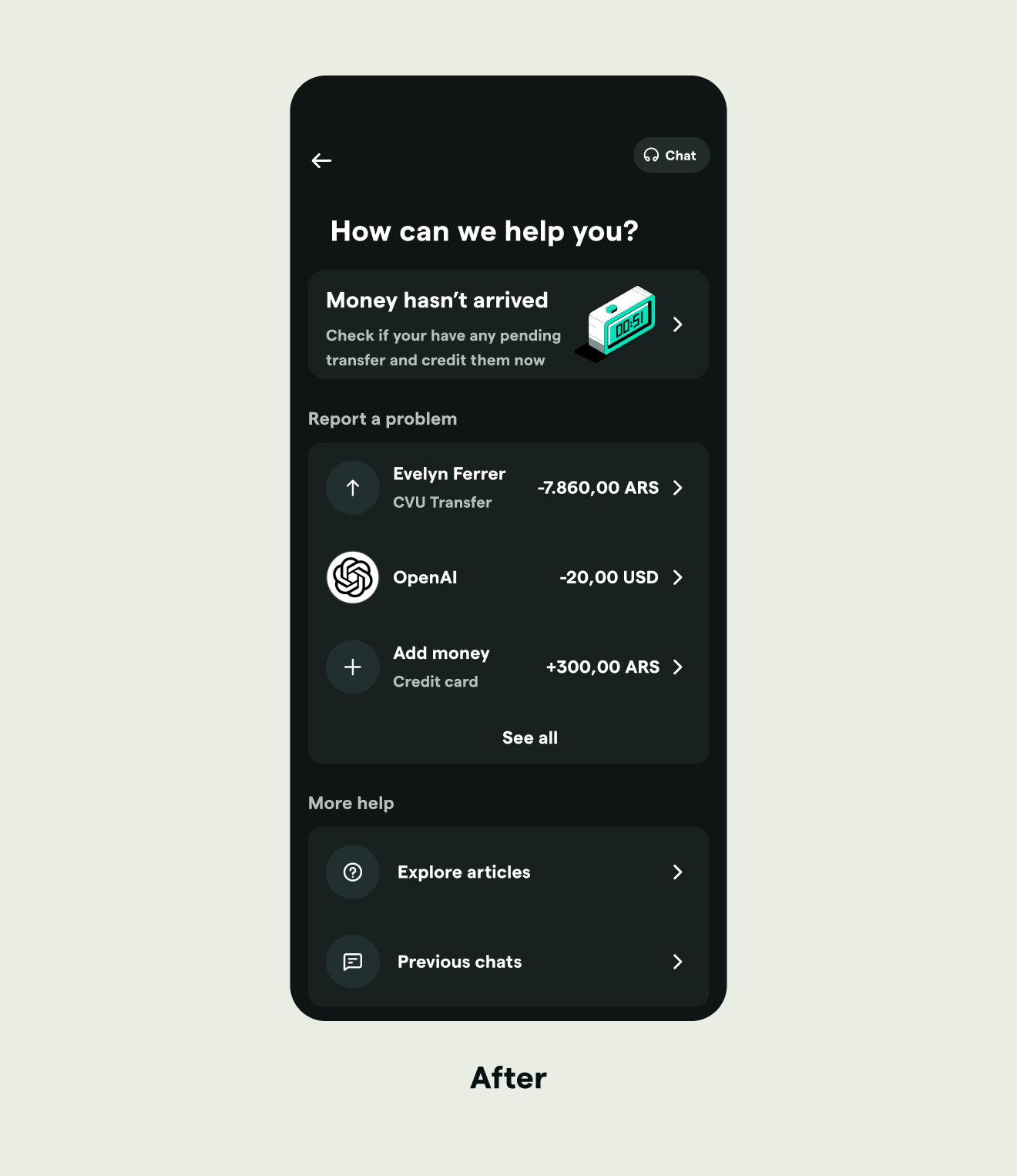
We redesigned the Help Center into a transaction-aware, context-driven self-service system. Instead of relying on generic categories, help is now anchored directly to user activity, allowing users to access support from the exact transaction where the issue occurs. We introduced a structured issue taxonomy aligned across product, support, and automation systems, enabling consistent classification and a shared language between users and internal teams.
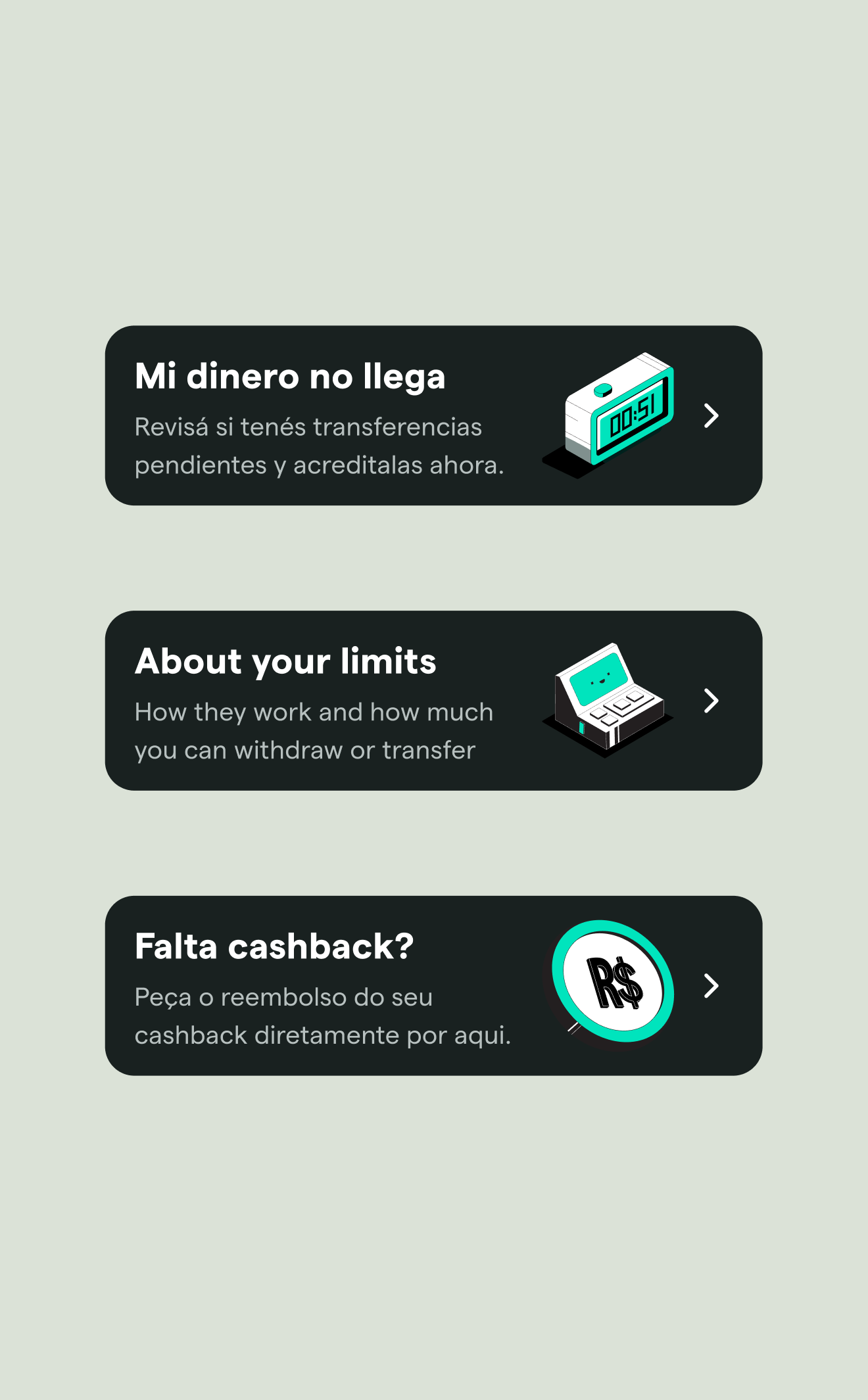
The experience dynamically adapts based on transaction status, surfacing only relevant issues and actions, which reduces noise and decision fatigue. Additionally, all support flows were designed to pass contextual data automatically, eliminating the need for users to re-explain their problem and significantly improving both resolution speed and support efficiency.


Outcome
- Reduced cognitive load at critical moments of user stress
- Enabled faster, more relevant self-service resolution
- Improved support efficiency through better context and data sharing
- Eliminated unnecessary back-and-forth between users and support
- Created a scalable foundation for self-service beyond card-related flows
- Strengthened alignment between product, support, and operational systems
Conclusion
This project helped AstroPay evolve its Help Center into a fully integrated part of the product experience. By embedding support into real user workflows and grounding it in behavioral context, Flexxi created a system that empowers users to resolve issues independently while improving operational efficiency at scale. The result is a more seamless, intelligent, and scalable approach to support.
.png)