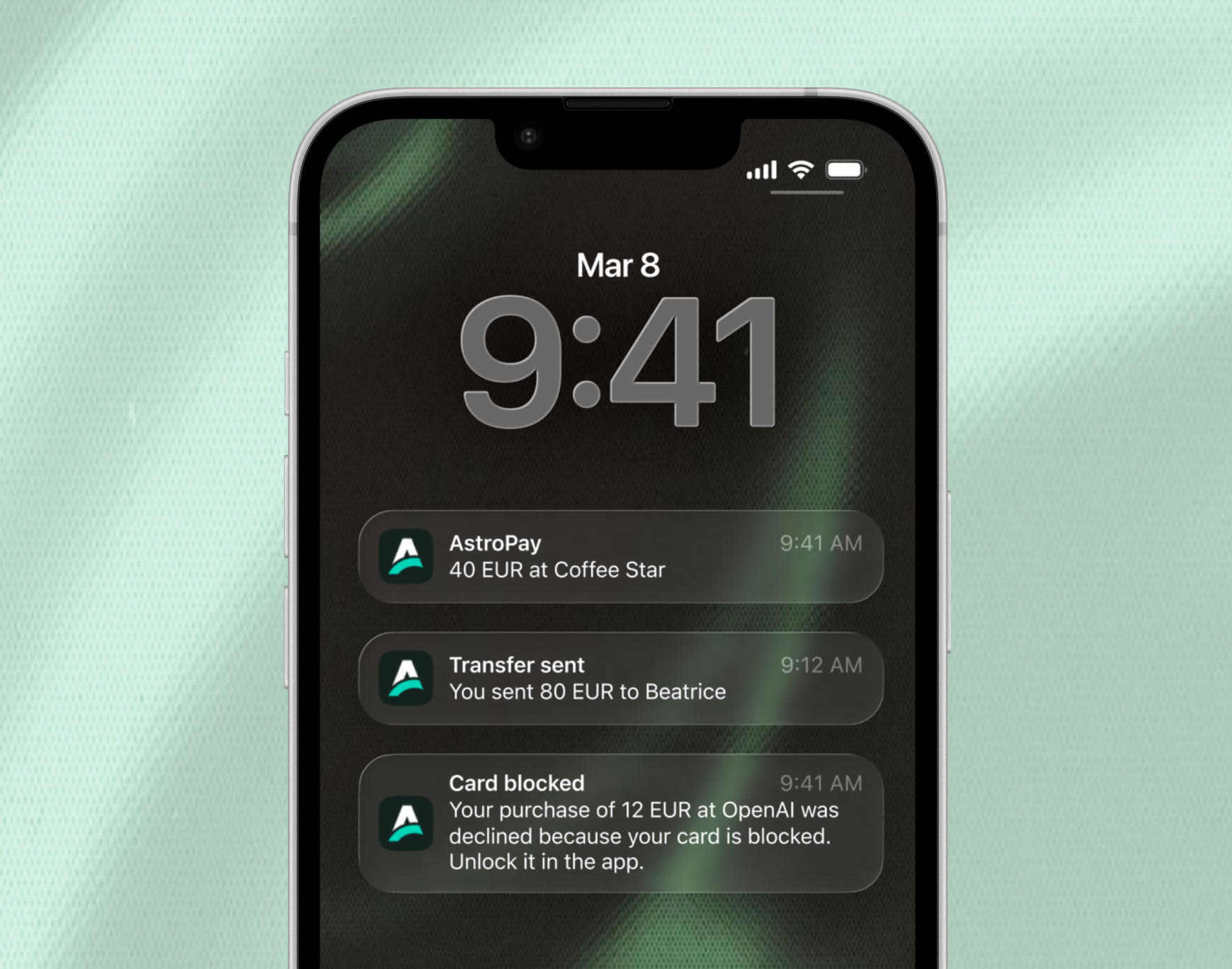
AstroPay’s Notifications System Reimagined

Project Overview
AstroPay partnered with Flexxi to redesign its card notification system, transforming it into a clearer, more structured, and user-centered communication experience. The project focused on improving how users understand their transactions in real time, reducing confusion, and aligning notifications with actual user behavior across different markets.
AstroPay’s notification system lacked clarity and consistency, making it difficult for users to understand transaction outcomes, especially in failed or declined scenarios.
The Challenge
The existing notification system was not providing users with the information they actually needed. Generic error messages like “System Failure” appeared in situations that required specific explanations, offering no actionable context. Notifications didn’t deep-link into relevant transaction details, breaking the natural flow of investigating an issue. Additionally, messaging lacked structure—there was no clear framework for how to communicate rejection reasons, what information to include, or how to present it. This inconsistency, combined with localization issues and poorly formatted titles, resulted in confusion, frustration, and an increase in support tickets.
Flexxi’s approach
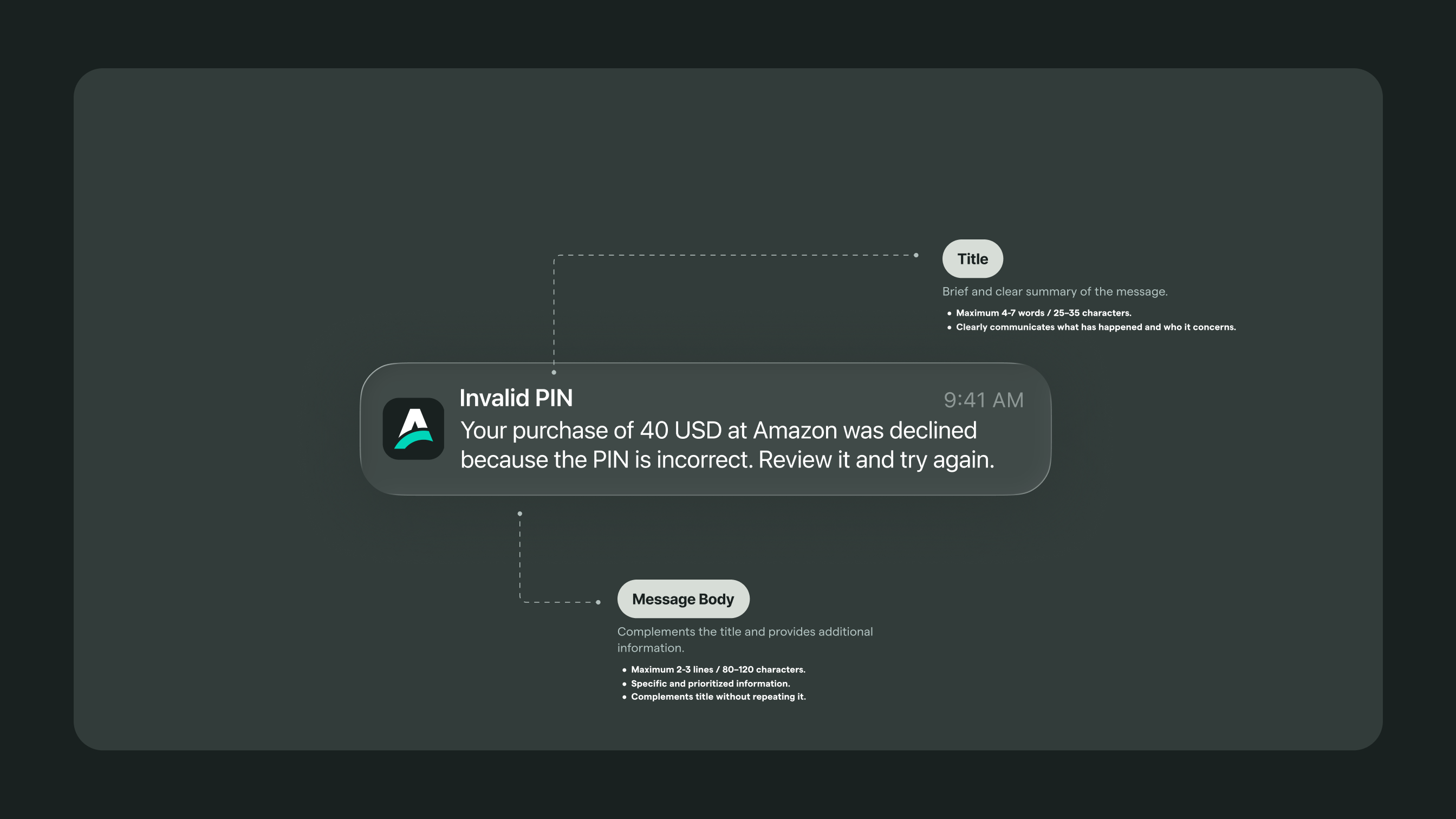
Flexxi approached the project through a behavior-driven UX and communication strategy lens. Instead of treating notifications as isolated UI elements, the team analyzed transaction patterns, user behavior, and support tickets to understand why users were getting confused. The focus shifted toward designing a system that could clearly explain what happened, why it happened, and what users should do next. This meant building a structured communication framework that could scale across different transaction types, markets, and languages while remaining clear and actionable.
Our Solution
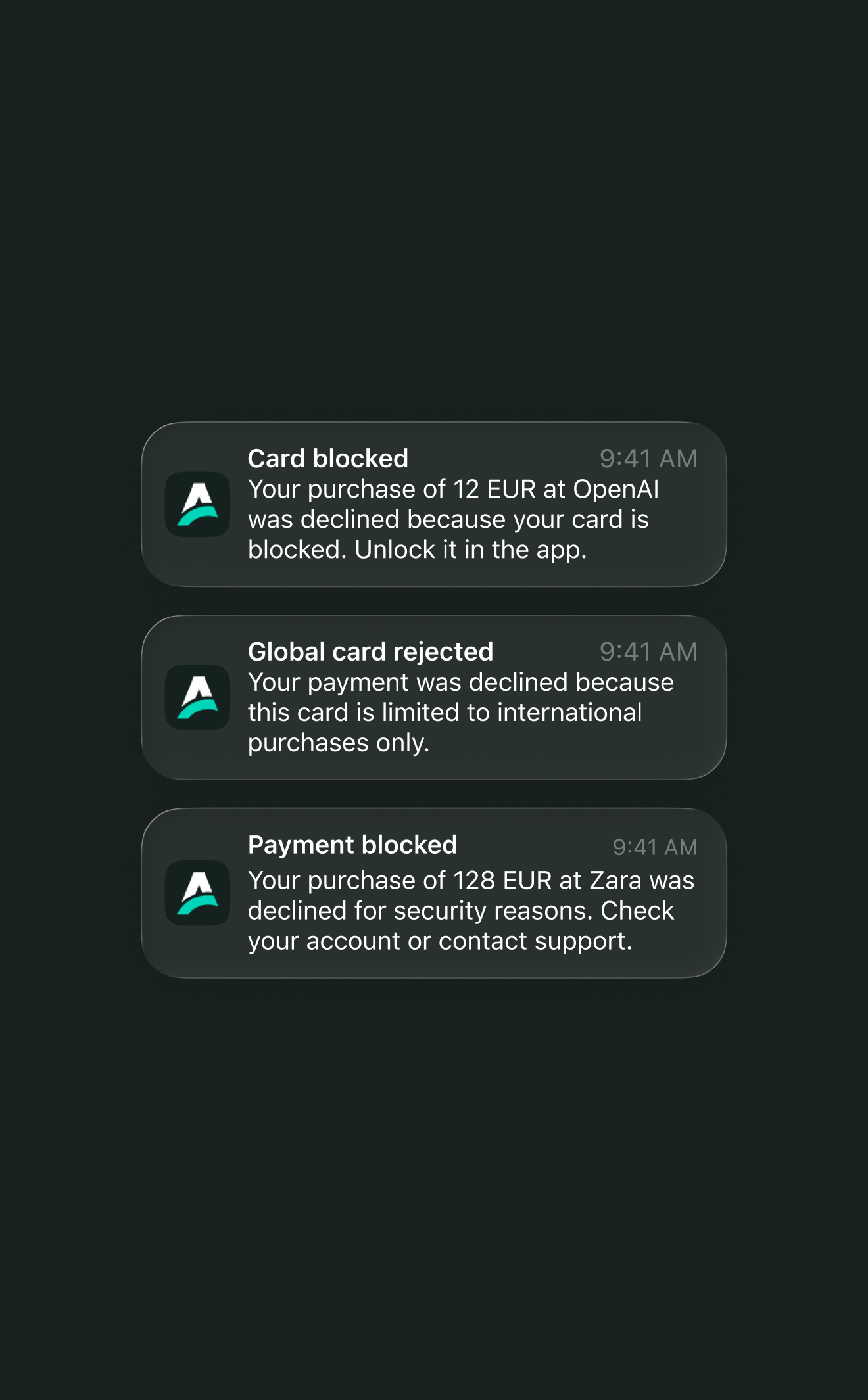
We redesigned AstroPay’s notification system into a unified, structured communication framework centered around clarity and context. This included auditing all existing push notifications and transaction states, then rewriting and categorizing messaging across multiple languages to ensure consistency across markets. We introduced a standardized message structure with concise titles and clearly defined message bodies that explain what happened, why it happened, and what users can do next.
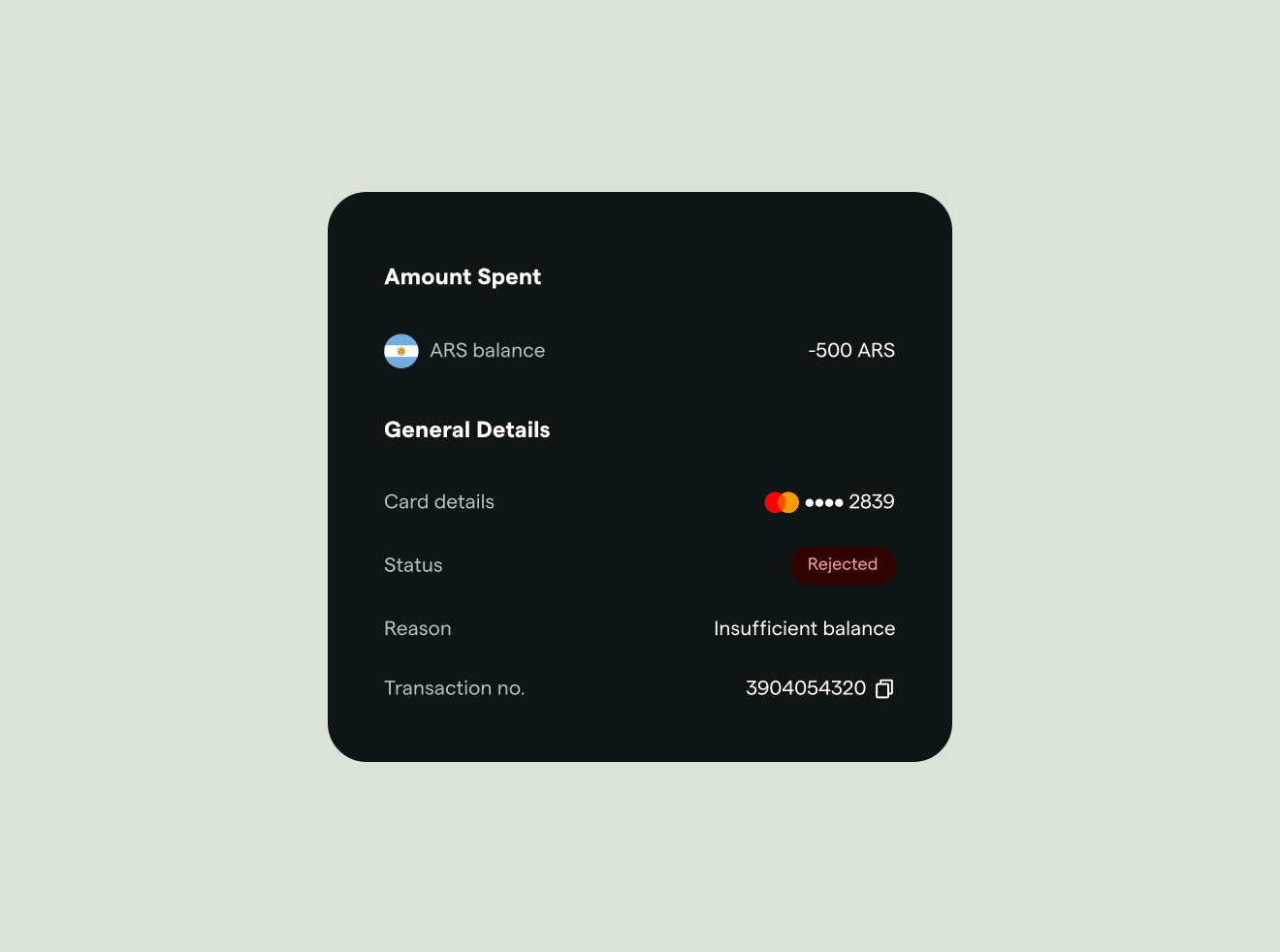
Notifications were redesigned to be context-aware, appearing only when relevant and deep-linking directly into Card Activity for seamless issue resolution. Technical language was replaced with human-readable copy throughout, and a clear categorization system was implemented to support different transaction types such as purchases, declines, reversals, and refunds—creating a more intuitive and scalable communication system.

Outcome
- Reduced confusion around failed and declined transactions
- Decreased support tickets related to unclear notifications
- Improved clarity and trust in transaction communication
- Enabled users to resolve issues independently
- Created a more consistent experience across markets and languages
- Strengthened overall user experience during critical transaction moments

Conclusion
This project helped AstroPay transform its notification system into a more meaningful and user-centered communication layer. By focusing on clarity, structure, and behavioral context, Flexxi created a system that not only informs users, but actively helps them understand and resolve issues, ultimately improving trust, reducing friction, and strengthening the overall product experience.