Amplitude's Session Replay

Project Overview
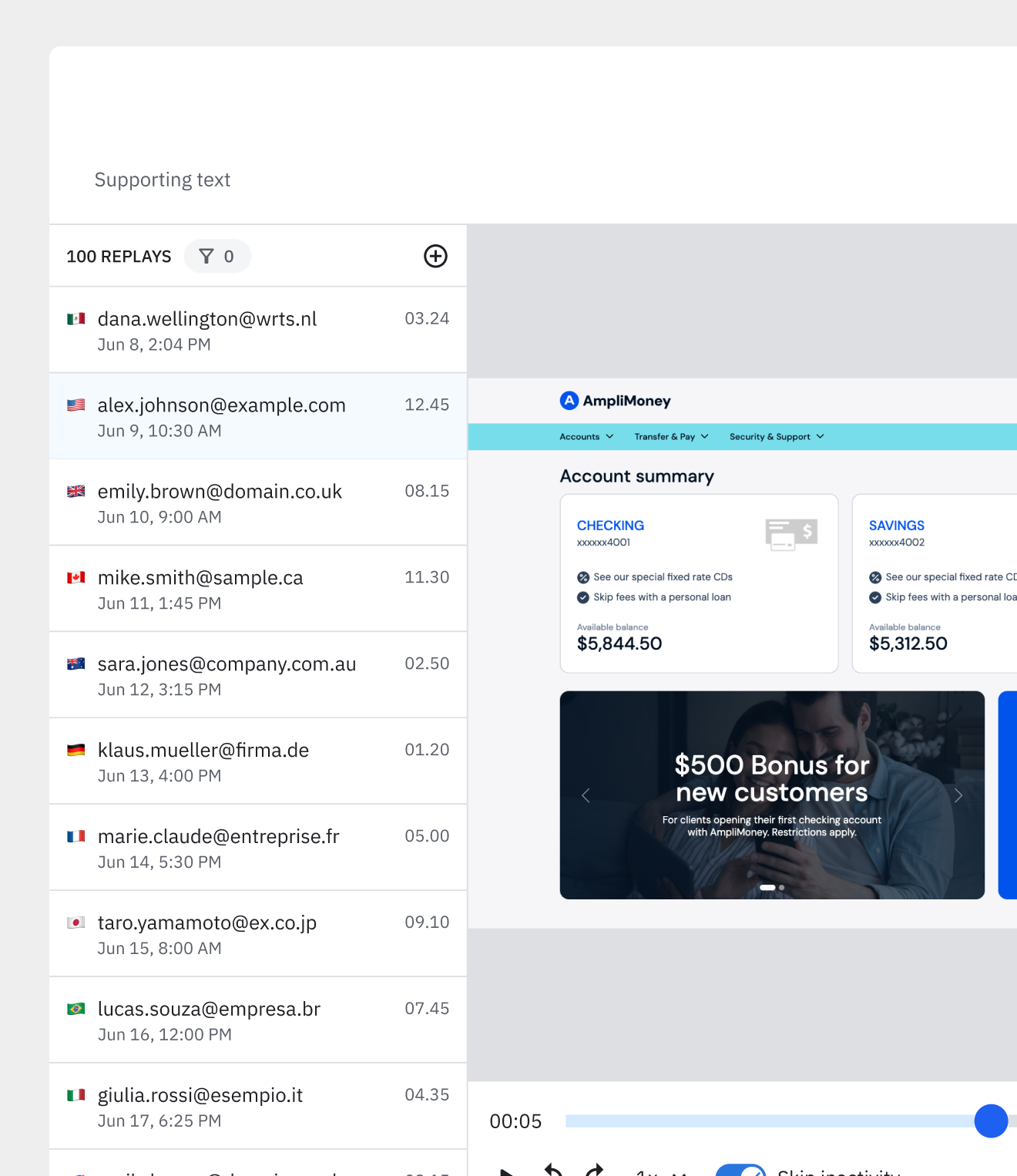
Amplitude partnered with Flexxi to rethink the Session Replay experience, transforming it from a passive playback tool into a more powerful product for surfacing behavioral insights. The project focused on redesigning how teams navigate, interpret, and act on replay data—making it easier for analysts, designers, and product teams to identify friction, errors, and opportunities at scale.
As Session Replays became longer and more complex, extracting meaningful insights from user behavior had become slow, manual, and difficult.
The Challenge
The existing Session Replay experience was already useful, but it was increasingly creating friction instead of reducing it. Analysts and designers were spending too much time scrubbing through long recordings to find the few moments that actually mattered. The player felt dense, hard to scan, and offered little guidance around where to look first. On top of that, multiple teams were working in parallel on different features, creating overlap and inconsistency in the product experience. The challenge was not only to improve usability, but to create a scalable interaction model that could support richer behavioral signals without overwhelming users.

Flexxi’s approach
Flexxi approached the project by reframing Session Replay as an insight delivery system, not just a playback interface. Rather than optimizing isolated UI elements, the work focused on defining a more unified and scalable UX strategy that could bring together multiple feature streams under one coherent experience. The team explored how behavioral signals such as frustration, technical errors, key moments, and AI-generated insights could coexist within the player in a way that felt clear, structured, and intuitive. The goal was to create a system that could evolve with the product while remaining usable and easy to interpret.
Our Solution
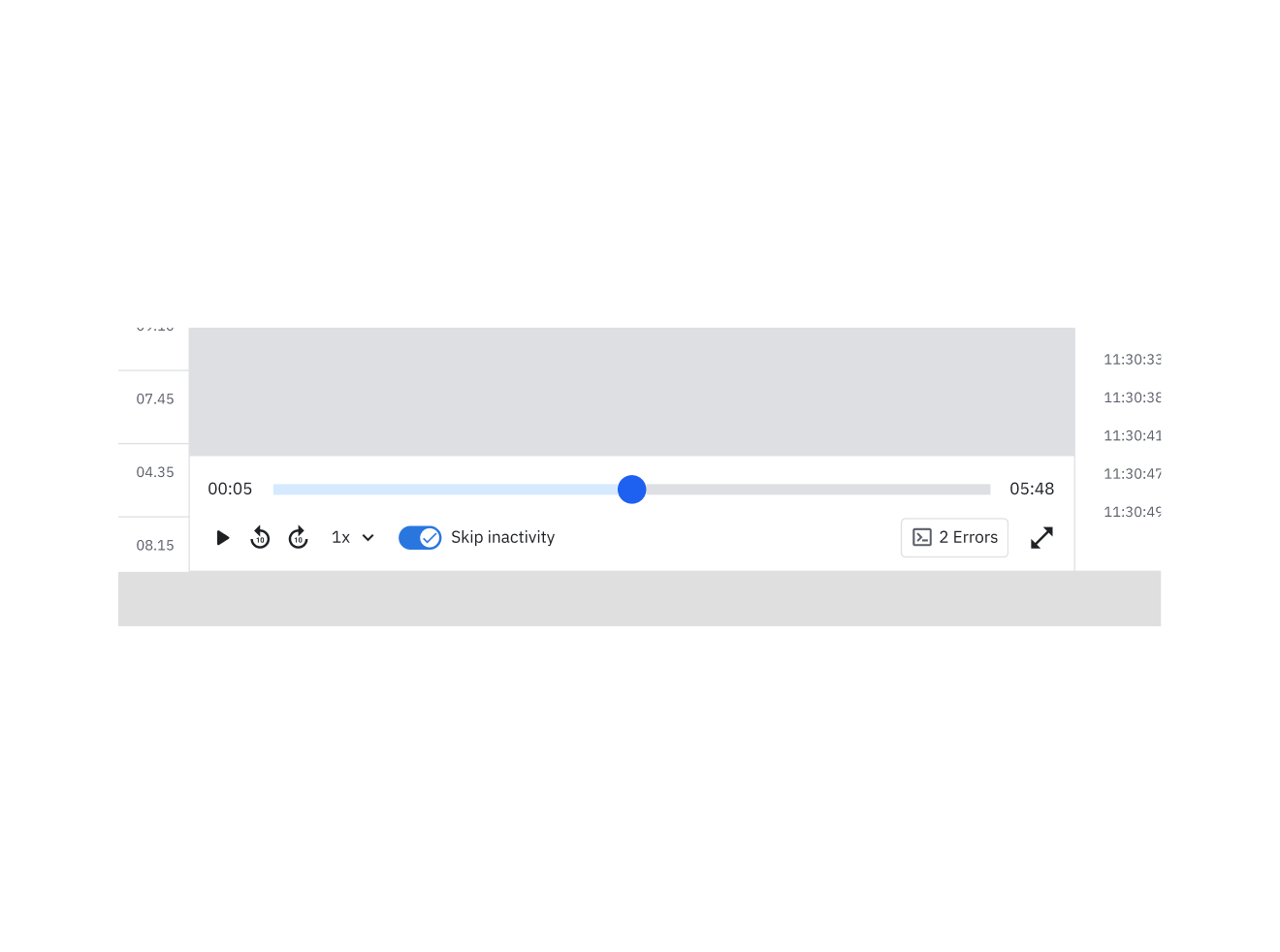
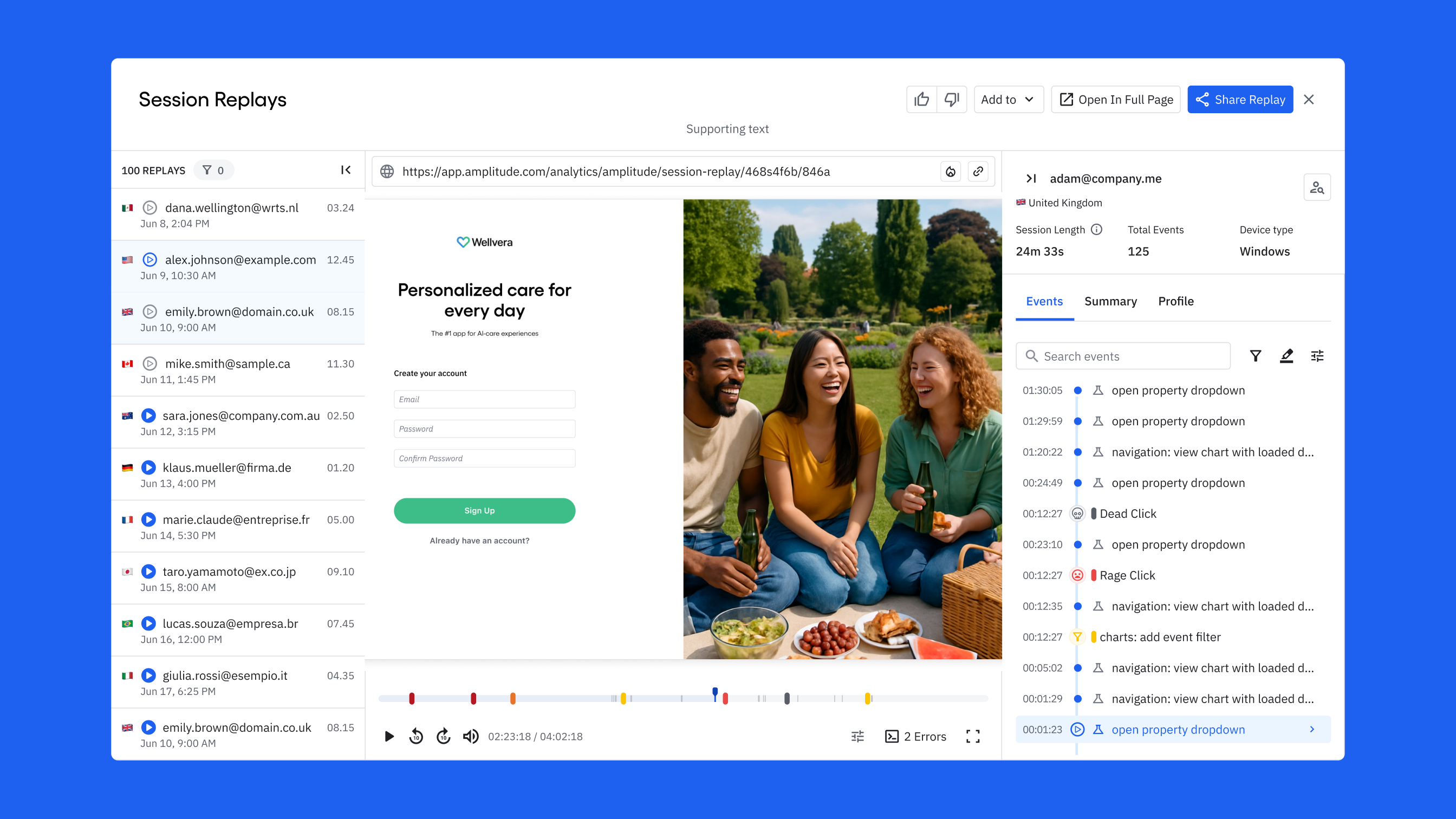
We redesigned Session Replay around a more dynamic and insight-driven interaction model. A major part of the solution was rethinking the timeline as an expandable surface rather than a static playback bar, allowing users to scan signals quickly in its compact state and access much more precision when needed. We also created a clearer framework for how multiple signal types—such as rage clicks, dead clicks, failed network requests, key moments, and AI summaries—could appear across the player and surrounding interface in a way that felt unified rather than fragmented.
To support alignment across parallel workstreams, we defined a scalable UX foundation with clearer hierarchy, modular interaction patterns, and a shared design direction. Finally, the experience was brought to life through a highly interactive prototype that demonstrated the intended behavior more effectively than static frames alone, helping stakeholders understand not just what the solution looked like, but how it actually worked.

Outcome
- Transformed Session Replay from a playback tool into a more actionable insight experience
- Created a more scalable UX foundation for future feature expansion
- Improved clarity around how users discover friction, errors, and key behavioral moments
- Enabled multiple feature streams to launch more cohesively
- Supported the integration of AI Highlights and Summaries into the player experience
- Contributed to double-digit increases across key adoption and retention metrics
Conclusion
This project helped Amplitude evolve Session Replay into a more intelligent and scalable product experience. By shifting the focus from raw playback to insight delivery, Flexxi created a system that makes complex behavioral data easier to interpret, more actionable for teams, and better equipped to grow alongside the platform. The result was not just a better player, but a stronger foundation for how Amplitude surfaces product intelligence overall.

.png)